They Have Spoken

Two recent articles, in Foreign Affairs and HBR, feature the views of two Harvard professors about the road ahead.  I commented on each one of them, and conclude here that the kind of intellectual leadership that has brought us where we are, through 2008, is alive and well.  Have a look for yourself, and draw your own conclusions!

------------8<-------------------------------------------------
The Future of American Power
Dominance and Decline in Perspective
Joseph S. Nye Jr.
Summary: It is currently fashionable to predict a decline in the United States' power. But the United States is not in absolute decline, and in relative terms, there is a reasonable probability that it will remain more powerful than any other state in the coming decades.
JOSEPH S. NYE, JR., is University Distinguished Service Professor at Harvard University. Parts of this essay are drawn from his forthcoming book, The Future of Power (PublicAffairs, 2011).

Yes, our perceptions about the future have gone up and down through our history, yet people's lives went also up and down unless they counted themselves among the lucky/Ivied. Each time our common fortune went up, it followed some long period of pain and was the result of some major transformation.

Professor Nye doesn't say a word about the type of transformation ahead. He talks generalities and quotes selectively in support of his argument. For example, he counts us as leaders in biosciences, but then why doesn't he look at the flip-side, to the requirement for this? A lousy and expensive medical system whose results are half as good, for twice the money, as in other developed economies. Surely, the argument could be extended to his dear universities--compare $50k to quasi-free in annual college tuition. Oh, his list of where we are #1 is almost comprehensive, for if he added military and financial innovation, the list would have been complete.

What do these observations make me think?

1) That our being #1 cannot be sustainable under status qvo, even in a reduced number of areas. Indeed, for example, an overburdened and socially under-performing medical system cannot be counted on to keep going forever.  The author's prescriptions amount to folklore. 
2) That Professor Nye may be, well, a bit out of touch. I guess, they don't call some the Boston Brahmin for nothing...

No, China won't go up and higher forever; Yet, a question lost on the author is, How big China's economy needs to be to turn it into a challenger? Going into GDP or per capita comparisons is not as relevant as the author makes it sound. Switzerland may get higher grades on many dimensions, yet it is hardly a menace for the US.

Nor will we reach the bottom in free fall. More likely to happen is a world choosing between our type of capitalism and state-capitalism. If we overcome the political gridlock (à la Fallows/Nye), the two types of capitalism will converge. Meanwhile, texts like this are meant to put the middle class to sleep.

------------8<-------------------------------------------------
The Big Idea: Creating Shared Value
by Michael E. Porter and Mark R. Kramer
The capitalist system is under siege. In recent years business increasingly has been viewed as a major cause of social, environmental, and economic problems. Companies are widely perceived to be prospering at the expense of the broader community.

Alas, this has been written by:

* E. Porter is the Bishop William Lawrence University Professor at Harvard University. He is a frequent contributor to Harvard Business Review and a six-time McKinsey Award winner.
* R. Kramer cofounded FSG, a global social impact consulting firm, with Professor Porter and is its managing director. He is also a senior fellow of the CSR initiative at Harvard’s Kennedy School of Government.

For the reader skeptical of my comment, let me quote from the article:

"Shared value is not social responsibility, philanthropy, or even sustainability, but a new way to achieve economic success. It is not on the margin of what companies do but at the center. We believe that it can give rise to the next major transformation of business thinking."

How many times has it been that we've heard such calls? Each time, they are similarly worded and meant to supplant government responsibility&action for a clean environment, sustainable societies and so on.

Now, allow me to state what the problem is with this: I have little control over how businesses operate, for they are subject to their institutional imperative of making short-term money. Arguably, the government is responsible to me. Do you see the problem? I can do little to nothing to influence business, I can vote every electoral cycle to keep the government honest. For those countering that we vote for business everyday with our wallet, I'd say, not anymore when you are in debt and/or the business in question is a monopoly. Moreover, if the behavioral requirement is not normative, as in a law subjecting all players to the same constraint, there will always be businesses trying to get advantage of not respecting otherwise self-generated social objectives.

So, the rule must be the same for all businesses, and the enforcer should be from the sphere of government/society, not businesses themselves.

------------8<-------------------------------------------------

Yes, I know, we don't do government, lest someone calls us socialist, but then why all the talk about business-this and business-that?  To pacify us while waiting for the next bubble?  If so, why not stop sucking on the damn rubber?

covering mirrors

The 2nd installment of wikileaks, Cablegate, has been partially released, as in 1/000.

The story behind the whole data-spill seems to have been initiated by Bradley Manning, 22, one of those we like to cheer about in terms such as our brave men and women serving in harm's way. Until he was locked up in solitary confinement, Manning used to be an intelligence analyst with the Army, outside Baghdad. In his own words, the facts were: "I would come in with music on a CD-RW labeled with something like 'Lady Gaga' … erase the music … then write a compressed split file. No one suspected a thing ... [I] listened and lip-synched to Lady Gaga's Telephone while exfiltrating possibly the largest data spillage in American history." He said that he "had unprecedented access to classified networks 14 hours a day 7 days a week for 8+ months." He even anticipated some reactions, "Hillary Clinton and several thousand diplomats around the world are going to have a heart attack when they wake up one morning and find an entire repository of classified foreign policy is available, in searchable format, to the public ... Everywhere there's a US post, there's a diplomatic scandal that will be revealed. Worldwide anarchy in CSV format ... It's beautiful, and horrifying." Stated motivation: "Information should be free. It belongs in the public domain."

Now, how symptomatic is this for the state of our empire, er, nation? Did we need a 22-year old to come and show how ugly empire is? Below are what can be two answers:

Dovid
Monsey, NY

This is what I call treason!
Recommended by NYTimes 237 Readers


Diana
New York

To Commenter #4, [Dovid] I'd say, No, compiling and releasing documents, 'none of which was marked top secret,' is not treason, it's democracy in action.

For a truly treasonous act, see the outing of an undercover CIA operative, Valerie Plame, who had worked for years setting up very successful false operation directed at uncovering 'weapons of mass destruction.' Her husband told the truth about the lies being that would justify getting into war, lies told by very powerful and deeply unpatriotic war profiteers, and she was 'outed' in revenge. She--and our country--continue to pay the price; the war profiteers continue to go free.
Recommended by 371 NYTimes Readers (highest number of recommendations)

I'd posit that running a large and complex system like the US, implies effective and efficient control mechanisms.  Effective as in get the job done, efficient as is make those controlled do the control themselves.  Efficiency comes wrapped in all the talk about our being a nation of laws, fighting for human rights and justice for all.  So, is it that a smart young man, driven by patriotism, enlists with the Army, yet his self-control breaks when he gets deployed and sees our relations with the world out there being so different from what we espouse at home?  

From a slightly different angle, let's review all the above from a 1992-perspective in Hollywood, a year after the official demise of the USSR due to our upholding higher values. You'll recognize Colonel Nathan R. Jessep, from 'A Few Good Man' in the You Can't Handle the Truth-moment.


To each his own, but considering the mounting problems we face, both internally and internationally, I'm afraid that not wanting to know the truth is akin to covering mirrors in the house after someone died.  It may be efficient but hardly effective.  
______________________________________________________

12/12/2010 Update
Whatever one may think of Bradley Manning, who took an oath when joined the Military, the situation with Julian Assange is a whole different matter.  Being on offensive will erode our standing, it's about principle not about any one individual.  We should accept OUR mistake(s), e.g. of not setting up proper systems, and leave Assange in peace. The earlier we do this, the less painful for all involved. This is neither the way to set an example, nor the type of example you want to set.

A Lincoln or Roosevelt moment?

The latest elections were remarkable for lacking surprise, no wonder many don't bother to vote!

The democratic machinery may be a little overrated to take us out of the many-decades-in-the-making slump. Somehow, the voters are still to figure this out, for this being one among the few dramatic swings, which otherwise would take several electoral cycles to happen, which shows that people still think they control the machinery by playing with a fake knob. Not to forget the enlightened skeptics, who may or may not vote, they think not much can be done anyway since the system is complex, as in don't bother to learn anything about it with the idea of improving. They hope, yet pass it for thinking, that somehow whatever it is they have been doing would keep them in their positions, while the world turns upside down round them. Of course, you recognize their ivory towers as skewers for the meat and vegetables exposed to the flame.

To return to major political/electoral swings, the one before was when we thought Obama and Democratic majorities would go for change. I guess, the 2010 swing is to appease the folk on the right, whereas the one before, in 2008, was to appease the left after 8 too many years of aggravation under Bush the lesser.

That we are going for a gamble has become obvious. It is not so clear how things will go from here. Internally, everybody is going to take a hit on everything they hold in cash--see the $600Bn as fuel for inflation eroding cash and confidence. Another way change will be effected internally is by virtue of the recommendations of the Obama's bipartisan debt-reduction commission.
"Cap revenue at or below 21% of G.D.P.”
“Lower Rates”
“Reduce the Deficit”

I read these to mean, status qvo on taxes and cut spending! The conservative approach towards taxes is to keep the elites happy, cutting the federal budget to size is to say 'swim or sink!' to the rest. The risk here is for the most people to perceive that budget cuts are somewhat unjust. If the twin issue of taxes & budget splits the electorate along the same line, I am afraid, it's time we reckon a Lincoln or Roosevelt moment in our nation.

But then again, we may also have war. No, it's not about Bush's open wars. For one, it could be economic war. The other countries are probably running through their options after the recent G20 in Seoul. Nobody wants to give up an inch, make it centimeter, or at least not in the open. If the Chinese-American relation gets rebalanced anew round an exchange rate, chances are that conflict is postponed. Otherwise, it's maybe wise to stock up on some trinkets; of course, I'm joking.

For another variant on the last point, brush up on your pre-1914 history. A good place to start may be here: Is globalization enough carrot...

Thoughts on stimulus
To break the deadlock we need a plan before we need more money

There is an economic school of thought in the U.S. that is advocating for more and earlier stimulus as a way to revive the economy.  This school has in Paul Krugman its most vocal supporter, and claims no less than Keynesian roots/legitimacy.

I employed "claims" instead of a more categorical verb, for a couple of reasons.  On the one hand, Keynes was much more aware of context whenever he made a recommendation than the scores of economists who followed him in all but spirit.  On the other hand, Krugman offers NO mechanism by which yet another money supply can stimulate anything except for a bigger bubble.

Given that Krugman, no less than Nobel laureate for economy, has been calling for a bigger stimulus for about 2 years, at least once a week in his NYtimes editorials,  I decided to comment on one of his recent pieces.  Here it is:
Krugman keeps talking about stimulus, yet what could a stimulus have done other than reignite another consumption-fueled bubble? And this could be so only if outsiders kept buying US paper.

We should have started rebuilding the country in 2000, yet we cut taxes, started a war on terror, and invaded Iraq in 2003. Bush should have signed Kyoto so the de-industrialization of America could have slowed down. Except that a future Nobel laureate economist was still praising trade liberalization, without concern for the unaccounted negative externalities associated with cheap imports. What was the middle American doing? Playing at the hands of the Government (Bush, Greenspan, Bernake), rating agencies, investment banks, and media&intellectual elites. Anyone still remembers the Republican Congress dealing with such important matters as doping in professional sports in June 2004? The public discourse had been about redoing the desert sands into oases of this and that while the bubbles in housing, defense, banking, healthcare and education (at all levels) were inflating.

At personal level, we should look at lowering expectations and increasing commitments. And, to avoid social collapse, let's make sure everybody puts skin in this game proportionate with their standing. People will mobilize to levels long-unseen if the burden of reinventing America is spread across, in a general climate of fairness. Treating us like responsible adults would be a good place to start. We did it, we'll do it again, just try us! 
Being treated like adults is a right we gave up long time ago, just see how the other guys keep pushing non-issues such as the Ground Zero Mosque(-rade).  Krugman, as if to appease a bunch of kids, is thinking short term and the reason for people like him to ask for stimulus, without a plan to spend it that would actually rebuild our economy, is his complete pessimism and/or his distance from the real economy.  The real economy is yet to find a way to move one car 1 mile with Twitter, yet that would be one of the more valuable pieces of American innovation in the last decade.

As a study in contrasts, consider how the Germans have approached their crisis. After 2 years of almost ignored calls for dumping money into banks, the Germans are rebuilding their post WWII cities:
Photo Gallery:A New City Quarter for Hamburg
Living with Sin: Germany Comes to Terms with its Ugliest Buildings (08/20/2010)
SPIEGEL Interview with Architect Christoph Ingenhoven: 'Modernism Is an Attitude, Not a Style' (08/13/2010)
Out of the Ashes: A New Look at Germany's Postwar Reconstruction (08/10/2010)
Interview with Architect Albert Speer: 'Calamity of Postwar Construction Came from Rejecting History' (08/11/2010)
The Germans, sometimes more capitalist than the US, have not fallen for the services economy, or the sanctity of the self-regulating market. They take their time to understand the consequences of their actions, and that goes even for their relation with China.

What are the Germans doing, do their cities need a makeover? Be it as it may; I think the Germans are investing in quality, for what else can you do in advanced capitalist economies?  Just as I called it in 2008, Encourage quality.  And we should say, there is a lot of unmet demand for quality in the US.  Unless you are, say, in some northeastern American state going through the annual ritual of re-paving the same traffic-jammed highways.

In closing, let's admit that what passes for stimulus has been of little consequence for the real economy.  It was meant to slow down the fall and give the decision makers some time.  From that perspective it was a qualified success.  A bigger stimulus could only have bought us more time, yet we also needed to signal fiscal responsibility/toughness to our partners.  Bernake has just told us that he is willing to move a lot of money from one pocket to the other.  I wonder who's going to be caught holding a mountain of paper in their hands.  To break the deadlock we need a plan before we need more money.

Break in reason vs. Rational narrative props

Here's a recent quote from the Nobel laureate economist Paul Krugman:
Appeasing the Bond Gods
As I look at what passes for responsible economic policy these days, there’s an analogy that keeps passing through my mind. I know it’s over the top, but here it is anyway: the policy elite — central bankers, finance ministers, politicians who pose as defenders of fiscal virtue — are acting like the priests of some ancient cult, demanding that we engage in human sacrifices to appease the anger of invisible gods.
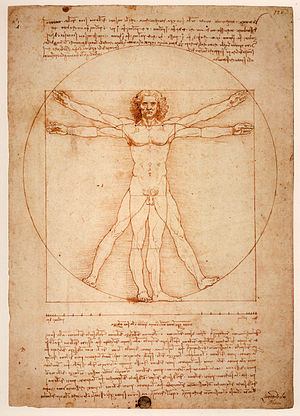
In this case, the invisible gods are bond merchants, those who move lots of pension/insurance money into lower yield and risk investment vehicles. Given our reliance on reason, at least at every official narrative level, is a moment like this a wake-up call? A call for a return to the whole man, as in the Vitruvian Man's mix of art and science?  In our quest to build a better society, by emphasizing the rational, have we come to a point where reason breaks, or reason-based narratives are proven to be just the clever backdrop against which the unabated drama of our human condition goes on?

Let the professional left eat cake!
symptom of a 1-term president

"I hear these people saying he’s like George Bush. Those people ought to be drug tested," Gibbs said. "I mean, it's crazy."

The press secretary dismissed the “professional left” in terms very similar to those used by their opponents on the ideological right, saying, "They will be satisfied when we have Canadian healthcare and we’ve eliminated the Pentagon. That’s not reality."

Of those who complain that Obama caved to centrists on issues such as healthcare reform, Gibbs said: “They wouldn’t be satisfied if Dennis Kucinich was president."

Without psychoanalyzing Gibbs, I take it that we have no chance for change.  Obama's middle name could be status qvo, just as well.  By 2012 one can say, Der Mohr hat seine Schuldigkeit getan, der Mohr kann gehen.   Moreover, by the time we are ready to inflate another bubble the Chinese may well be #1.

Speaking of bubbles, a very real one is in education, where the situation is just as in healthcare, even including the need for a national system* similar to a single payer.  Local budgets being already bankrupt and universities being so expensive relative to the earning power of their graduates, turn education into a luxury item.   Besides costs, the other taboo in education is the quality of the graduates relative to the needs of an economy that is competitive beyond Twitter or American Idol--just ask the executives at Intel or Microsoft.  We have run for so long an economy that functionally distorts education that even if we were able to correct the situation today, we'd still be 20 years away from the results.  It was also with this second taboo in mind that, at one point in time, I pledged for turning the US universities in the 21st Century Ellis Island.  Obama is considering instead the legalization of the millions of illegal low-skills/intensive laborers when a work permit, if anything less than repatriation, would be the way.  So, between the pressures coming from 3rd world low wages and illegal immigrants, and considering the disappearance of the school as a leveling social force, we'll converge quietly to a low station.  Will polarization be internalized or tear us apart?

Why is education important in any revival scheme?  To match human potential with the needs of the world.  How responsible is Obama?  At certain level, no more than any individual who's put up with made-up stories about better education for several decades now.  Oh well, we really have a chance to see how feedback works in capitalism, won't we?

_____________________
* For those objecting on principle about the idea of a national education system, consider that many a school superintendent makes probably just as much as the secretary of education in a country like France.  If that's not enough, consider also the billion dollar industries round testing and textbooks.

Good summary from blogosphere

The Truth About the Bailout

There’s so much information (not to mention “information”) about the big banks, the Bailout regime, and the financialized economy the banks and government constructed and now use as the vehicle of tyranny.

How to process it all? How to separate the good information from the bad, the useful from the pointless, the truth from the lies? How to weaponize each idea, anecdote, and piece of data?

Here’s a list of criteria which are true and, I think, useful.

1. The big banks caused the crash. They hold the overwhelming responsibility for a Tower of Babel which was bound to come down and is bound to come down again. Any other responsibilities are trivial. The proximate causes are irrelevant.

2. The Bailout artificially props up insolvent banks. But in spite of their phony profits, the banks remain collectively insolvent, and most if not all of them individually so. Every cent they gamble and loot comes directly or indirectly from the Bailouts, from free QE money, from the TBTF premium. It’s ALL taxpayer money. The big banks are now permanent wards of the state. We the people OWN them once and for all, and are free to do anything we want with them, the moment we are inclined to do so.

3. The Bailout accomplishes no socially valid end, but only enables the banks to reopen the casino.

4. The Bailout only intensifies monopoly concentration, which lay at the core of the Too Big To Fail extortion dilemma. (The policy of TBTF only helps confirm the structure in a positive feedback loop.)

4A. (Wealth and power concentration in themselves are anti-democratic, socially and economically destabilizing, and morally perverted.)

5. The finance sector is a purely rent-seeking monopoly. We can place pretty much anything it does on the list of feudal tactics. Every cent they extract is a TAX upon us. All their “innovations” are con jobs, and all their lobbying is bribery and extortion. Rentier Wall Street is the driver of all federal government policy, with the corporatist government serving as a functionary, a conduit, and as a goon.

6. No true reform will be legislated thanks to corruption. We can extend this: The system is so corrupt beyond redemption that there will never be constructive major legislation again. All major bills will be Potemkin at best (like the finance “reform” bill is looking to be), or a further assault (like the health racket bill). In either case they will only seek to further entrench the rackets oppressing us.

7. Anything which is legislated will not be enforced thanks to corruption and capture. We can extend the principle: The law itself is a battleground, and the rule of law in great jeopardy.

8. We don’t need the big banks for recovery, for lending, for international competition, for anything else. All the evidence is that smaller banks provide the real value here, while big banks are not only unable and unwilling to engage in constructive action themselves, but their monopoly power actively hinders the smaller banks.

9. The size of the banks runs counter to our need for a decentralized economy with greater resiliency and robustness. The stimulus has been remarkable for how little money has headed in a constructive direction. This is because of the banks.

10. Only the rich have benefited from the Bailout. Only they will continue to benefit. Everyone else is prey.

11. The banks (and therefore the Bailout) fund the permanent war, which in turn militarizes the country for the benefit of the banks.

12. The stock market is the terrorist wing of finance monopoly. Its purpose is to punish all public interest government action (for example letting the market work in Lehman’s case, or the Congressional rejection in the first Bailout vote). Such punishment is a tool of disaster capitalism, generating the sense of immediate crisis, the Shock Treatment, to terrorize and stampede policy-makers, the media, and the public into allowing or enabling the power and loot grabs.

(On the other hand, it rewards official crime. Thus health insurance stocks have been a barometer of the policy debate on health reform, for example going up after every racket-friendly action on Obama’s part.)

Appendix: The mainstream media’s coverage is systematically biased in favor of corporatism, often atrociously so. The infrequent good articles are accidents, incidental to the media project.

The Bailout is a war upon America. This is Bailout Nation, Bailout America. (We should settle on a name for this debased regime, this perversion of America.)

The basic principles of freedom and humanity tell us that the only measures of an economy’s health, practically and morally, is how well it empowers the people of a society to produce real goods and services for themselves, and how many good jobs it empowers them to create and preserve for themselves.

No other metric has any inherent validity, and nothing else as far as money flow has any value. The rest is just a shell game.

These truths dictate the right positive principle, relocalization, and the necessary negative principle, anti-corporatism. the need to smash the banks. For we are at war.

The call – Smash the banks! Break up Too Big to Fail! Too Big to Fail is Too Big to Exist.

Of any policy we must ask first, What will it do to help Smash the Banks? Of any alleged leader or would-be leader: Where is their call to relocalize? And what have they done to help Smash the Banks?

rene

most look for the past, the lucky seize the moment, the very few look round the corners

At the thinking person level, the economy is mostly a narrative line or another. Sometimes, we feel like joining narratives, yet the ideologues in charge with economic policy would have none of that. This would matter only little had the economic narratives remained constrained to the space of ideas. But economic narratives drive policy and passions, they commingle dialectically with reality.

Looking ahead, in normal times, consists of plotting the dominant narrative in some future, accounting for those kind of medium-term foreseeable changes one can come up with. Our time does not allow such comfort.

The biggest challenge to our capitalist storyline is WAR--assuming no natural cataclysm. I am not taking about war with Iran, though most any war can turn into WAR. Such capital event can be imagined as the result of tension-escalation between a overly sensitive incumbent, magnifying some real or perceived wound, and an incumbent.

I wonder if a renewal of the US Congress with new faces can bring about lawmakers who are more aware of our grassroots-vulnerabilities, -possibilities, and -opportunities. Today, most people in Congress resemble too much the Soviet Politburo in the last years of Brezhnev.

Another challenge, against which the State started preparing after 9/11, is internal unrest. Lacking a support system and facing structural unemployment for years to come, the American fabric may be wearing thin. The legalization of the illegal immigrants can fuel the State for a while longer.  Nothing is guaranteed, though.  Indeed, think of the leaked names and addresses of the illegal immigrants in the state of Utah.  For one, from Utah hail many a patriot, this being the top contributor state to the US Army.  For another, such list could only come from inside the power enforcing mechanism...  Just as Bradley Manning, who also came from inside the power enforcing mechanism.

If we make it through, the big challenge becomes in structuring a post-capitalist society. Can we get so productive and have such a progressive tax system to (sustainably) land in post-capitalism? To those wishing a return to capitalism I can only say that it's tardy late, unless we are ready to lock ourselves in and wait for about two decades until we can achieve some level of self-sustainability.

In closing, I feel like I also need to stand in for today's elites. If a new world order were to happen things might go on for a few more decades. Several managed crises will be necessary, provided that the sense of injustice won't be too high/widespread. Again, the keyword is "managed."

P.S. At a time I used to be more optimistic I authored "Open Letter, for O8." It was a 7-point summary of what I thought we needed at the time Obama and McCain were presidential candidates in 2008.  I think President Obama has done more or less about most points with one exception, Let wages converge lower;  I have to say that this is the direction we are moving towards, and the slowness of getting there is commensurate only with the size of the task itself.  No easy there! 

Popular Posts