On Time
I remember when I was a corporate cog waiting for the time to pass and call it a day. Until I realized it was my own time I was in effect wishing away, as if I had been living on someone else's time.
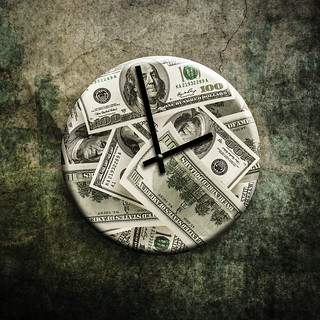
Time is this artifact, meant to approximate something more valuable than the other one everyone keeps talking about, money. Modern time has been reduced to its one-dimensional and linear form, an evolutionary process to make us efficient. And so much poorer unless we regain access to time's other dimensions and non-linear duration(s).

Now I realize why money has been so successful an object of desire, for its enlightened handlers know that it is through it they take away others' time. This is so much so that man always looks for time multipliers, which come as a mix of people and technology. Oil is a mega-multiplier, and it was arguably its discovery and industrial applications that ended slavery in the West.
How sad is it then to see no revolutionary demand for time?! How ironic is it to see each recent technology wave promising more time for ourselves!?
On Syria
That Obama has overtaken Bush II is a fact that comes to show who's not in charge at the White House. So, as if doubling up in Afghanistan were not enough of a Bushism, and Obama wanted his own mark on the Axis of Evil, the talk now is about Syria.
In a way, Syria is a proxy for Iran, but not without its own risk: Russia. The discussion here goes beyond the traditional relation between the two countries and reaches, for example, strategic levels. In short, it's about GAS.
Background Facts:
1) Russia's prominence in the world follows the prices of natural resources, especially energy;
2) UPI reports that
So, what's the big deal? I will not go into the details of how the US is yet again invoking reasons that fail to win support for an intervention even at home, that is, an enterprise whose risk-reward profile/opportunity cost keeps even the British away. The big deal here is in calculating the reaction of a revanchist Russia, which may well feel like interwar Germany.
As a side show, the reaction of the Syrian elites surrounding Assad will be interesting. I think, after the lessons in Iraq, Libya, Egypt..., local elites would think twice before turning against their strong man, lest they are left to their own devices to earn a living under market conditions.
So, strategically, the US would probably welcome another failed state. Tactically, the whole question is how remotely from the reactive Syrian capabilities can the US strike? Distance being inversely proportional to effectiveness and efficiency. One can only hope that the Syrian communication capabilities have been deciphered for good and their control capabilities will be scrambled. Shortly, we'll get to infer the Russian state of the art.
In a way, Syria is a proxy for Iran, but not without its own risk: Russia. The discussion here goes beyond the traditional relation between the two countries and reaches, for example, strategic levels. In short, it's about GAS.
Background Facts:
1) Russia's prominence in the world follows the prices of natural resources, especially energy;
2) UPI reports that
The U.S. Geological Survey reported in 2010 the Levant Basin, covering all these territories, contains at least 122 tcf of gas and 1.7 billion barrels of oil.See the image below for a map of the area:

So, what's the big deal? I will not go into the details of how the US is yet again invoking reasons that fail to win support for an intervention even at home, that is, an enterprise whose risk-reward profile/opportunity cost keeps even the British away. The big deal here is in calculating the reaction of a revanchist Russia, which may well feel like interwar Germany.
As a side show, the reaction of the Syrian elites surrounding Assad will be interesting. I think, after the lessons in Iraq, Libya, Egypt..., local elites would think twice before turning against their strong man, lest they are left to their own devices to earn a living under market conditions.
So, strategically, the US would probably welcome another failed state. Tactically, the whole question is how remotely from the reactive Syrian capabilities can the US strike? Distance being inversely proportional to effectiveness and efficiency. One can only hope that the Syrian communication capabilities have been deciphered for good and their control capabilities will be scrambled. Shortly, we'll get to infer the Russian state of the art.
The Money Postulate
In capitalism, money that is left to its own devices deluges towards the biggest market.
All else follows.
Subscribe to:
Posts (Atom)
Popular Posts
-
The 2nd installment of wikileaks, Cablegate , has been partially released, as in 1/000. The story behind the whole data-spill seems to hav...
-
Capitalism is itself an artifact, based on a fiction. Sooner or later, it runs out. Some of its plot elements are property, law, innovatio...
-
A little less than 3 years ago, I commented about the unfolding episode of WikLeaks . [...] a smart young man, driven by patriotism, enlis...
-
A recent NYTimes article informs us about the Chinese plan to redirect massive amounts of water to their dry north from their wet south. H...
-
That Obama has overtaken Bush II is a fact that comes to show who's not in charge at the White House. So, as if doubling up in Afghani...
-
This past winter, during a half-day stopover in Paris, I took to its streets, wandering more or less aimlessly. Near the Archives nationale...
-
"I hear these people saying he’s like George Bush. Those people ought to be drug tested," Gibbs said. "I mean, it's crazy...
-
By Susanne Beyer and Lothar Gorris Italian novelist and semiotician Umberto Eco, who is curating a new exhibition at the Louvre in Paris, ta...
-
I remember when I was a corporate cog waiting for the time to pass and call it a day. Until I realized it was my own time I was in effe...
-
I have been writing about the too big for our good capitalist entities for some time now (e.g., here ). The NewScientist features "a...